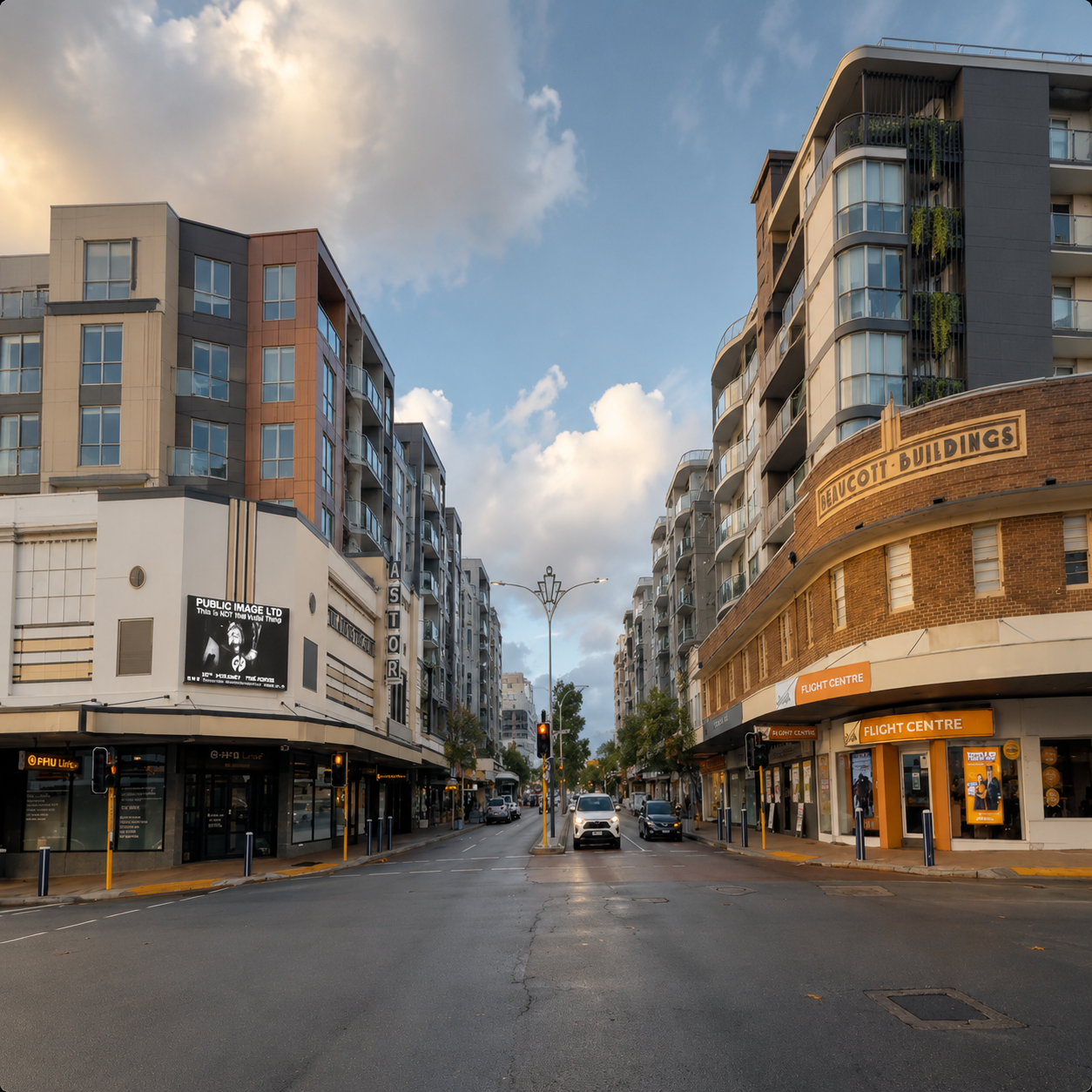
Thank you, Mount Lawley and Inglewood.
Submissions to the City of Stirling have closed — and the community spoke with remarkable breadth and strength. This is what you said, and what happens next.
The campaign isn't over — here's your next stepThe community spoke — clearly
Residents from across the area made their own, individual submissions. The figures below are proportions of those who responded through this campaign.
85%
wrote their submission in their own words — original, not a template
7 suburbs
represented, from Mount Lawley and Inglewood to Menora, Coolbinia, Maylands, Dianella and Bayswater
Every age
group was represented, from those in their twenties to residents of fifty years' standing
67%
asked to stay involved — this concern isn't going away
Why this matters. In the previous round of consultation on draft LPS4, 141 objections were lodged as templated, pro-forma submissions — the kind a council can set aside as a form-letter campaign. This time, the overwhelming majority of submissions were original and individual, each in a resident's own words. On the City's own submission categories, these cannot be dismissed.
What concerned people most
Every concern we offered was raised by a clear majority of respondents.
The issues we raised with the City
Our position throughout has been constructive — not to stop reform, but to keep the protections that actually work. In short:
Scheme-level protection has been removed
The Beaufort Street Local Development Plan and the Heritage Protection Special Control Area gave the old framework real legal force. Draft LPS4 drops both and leans on a guidance policy. We've asked the City to reinstate them.
The specific built-form controls are gone
Height caps of 3–5 storeys, the 2.5 m upper-storey set-backs that protect heritage shopfronts, laneway and side-street set-backs, blank-wall prevention and awnings — all dropped. Precise controls like these only work in a binding Local Development Plan, not guidance.
Demolition-by-neglect enforcement is weaker
The current Scheme places a duty on owners to preserve heritage places and makes ignoring a repair notice an offence carrying real penalties. LPS4 carries neither. We've asked the City to keep those teeth.
Traffic, parking and governance unaddressed
Residents raised gridlock on an already-strained arterial, the cumulative load of the ECU site, parking overflow, and large applications bypassing the City to the WAPC. The policy should answer these.
This is not the end — it's the moment that counts most
The consultation has closed, but no decision has been made. The draft policy now goes to Council — to your elected councillors — and they will decide whether it is adopted, strengthened, or sent back. They answer to you.
The single most powerful thing you can do now is contact your councillor personally — a short email or phone call in your own words. Councillors count the voices of the residents who elect them, and a personal message carries far more weight than a form letter.
Lawley Ward
Your councillors if you live in Mount Lawley
Cr Joe Ferrante
joe.ferrante@stirling.wa.gov.au0418 891 274Cr Suzanne Migdale
suzanne.migdale@stirling.wa.gov.au0417 137 362
Inglewood Ward
Your councillors if you live in Inglewood
Cr Damien Giudici
damien.giudici@stirling.wa.gov.au0430 436 094Cr Daniela Ion
daniela.ion@stirling.wa.gov.au0416 667 125
Not sure which ward you're in? Look it up · or see all councillor contacts.
Not sure what to write? Copy this and make it your own:
Subject: Please protect Beaufort Street's heritage in Local Planning Scheme No. 4

Dear Councillor,

I am a resident of [your suburb] and I am writing to ask you to protect the heritage character of Beaufort Street and the surrounding Mount Lawley and Inglewood Heritage Areas.

I am concerned that the draft Local Planning Scheme No. 4 and the new Beaufort Street policy weaken the protections we currently have. I ask you to:

- Reinstate the Beaufort Street Local Development Plan and the Heritage Protection Special Control Area in LPS4.
- Keep the specific height limits and set-backs as binding rules, not as guidance that can be set aside.
- Retain the existing protections against demolition by neglect.

[In a sentence or two, tell them why Beaufort Street matters to you.]

Thank you for representing our community.

[Your name]
[Your street and suburb]
Fill in the [bracketed] parts before you send. A personal line of your own carries the most weight.
The Mount Lawley Society will keep the community informed as the policy goes to Council. You can also read the City's consultation material on its project page.